Staffy in Australia — the honest 2026 guide
Also known as: Staffordshire Bull Terrier, English Staffy
By Dogthings Editorial · Updated 2026-10-18
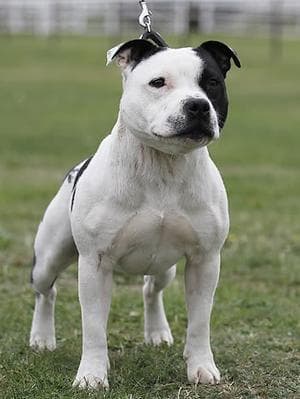
Affiliate disclosure: Some links on this page earn us a commission at no extra cost to you. We only recommend products and services we'd use with our own dogs.
Nicknamed the 'nanny dog' for good reason — Staffies are famously patient with kids and adore their people. Under-socialised Staffies can be dog-reactive, so puppy class is non-negotiable.
Staffy temperament
Loyal to the point of being velcro. Boisterous and strong — they'll pull the lead until trained otherwise. Generally fantastic with family; can be iffy with unfamiliar dogs.
History in Australia
Bred in England's Black Country in the 1800s. Arrived in Australia post-WWII and became a working-class family favourite. Consistently in the top 10 AU breed registrations.
Who the Staffy suits
Good for:
- Families
- Active owners
- Apartments (if exercised)
Watch out for:
- Skin allergies and atopy
- Dog reactivity (needs early socialisation)
- Heat sensitivity
Training a Staffy
Loose-leash walking from week one — they'll out-pull an untrained adult otherwise. Invest heavily in socialisation between 8 and 16 weeks with varied dogs and environments.
Owning a Staffy in Australia
Microchipping, council registration, desexing, strata by-laws and restricted-breed rules apply to every dog in Australia regardless of breed. The state-by-state detail is in our guide to Australian dog ownership laws.
What matters specifically for a Staffy: medium-sized dogs attract the lower end of council registration fees, and generally clear the size conditions strata schemes are permitted to impose. Budget $60 – $100/month on food, on top of the $400–900/year in routine care every Australian dog owner carries.
Common Staffy health issues
- Atopy / skin allergies
- Hereditary cataracts
- L-2-HGA (DNA test)
- Hip dysplasia
Insurance note: Skin and allergy claims are frequent. Mid-range premiums. BSL does not apply to English Staffies in any AU state — it does apply to American Pit Bull Terriers.
Best food for a Staffy in Australia
Our top picks based on coat quality, digestion, and AU availability:
- Ivory Coat Grain Free Kangaroo (for allergy-prone)
- Meals for Mutts Chicken
- Black Hawk Grain Free Salmon
Essential gear for a Staffy
Six things that genuinely matter for a Staffy living in Australia:
The best Staffy-specific food deals, insurance updates, training tips and AU vet care — once a month, one email. Unsubscribe any time.
No spam. We forward affiliate commissions back into our content budget. See privacy.
Frequently asked questions
Are Staffies legal in Australia?
English Staffordshire Bull Terriers are legal in every state and territory. Breed-specific legislation targets American Pit Bull Terriers, not English Staffies.
Are Staffies good with kids?
Exceptionally so when raised with them. Their 'nanny dog' nickname predates modern marketing. Always supervise any dog with young children regardless.
Staffy-specific cost + care reading
- Staffy lifetime cost breakdown — first-year + 10-year numbers
- Snake bite cost in Australia — every AU owner should read this before summer
- Best pet insurance Australia 2026
Similar dog breeds
If the Staffy doesn't quite fit, these breeds share a similar size and energy profile:
Read next
- Apartment vs Backyard Dogs in Australia — which breeds actually work in a unit?· 7 min read
- Puppy Vaccination Schedule Australia — C3, C5, C7 explained· 6 min read
- First-Year Dog Budget Australia — what a puppy actually costs in 2026· 8 min read
Still deciding on a Staffy?
Run the numbers with our food cost calculator, or compare pet insurance for Staffys before you commit.
Updated 2026-10-18 · Not veterinary advice — always consult your vet.